
Non-UKGC Licensed Casinos: The Real Picture for UK Players in 2026
 Available in GB
A UK player searching for a casino that operates outside the UK Gambling Commission’s reach is not looking for an empty corner of the internet. The market is loud, the offers are large, and the regulatory shape behind them is concrete. What follows is a working map of that landscape: the legal position, the protections that travel and the ones that do not, the operators that define the choice this year, and the support services that exist regardless of which licence a site carries.
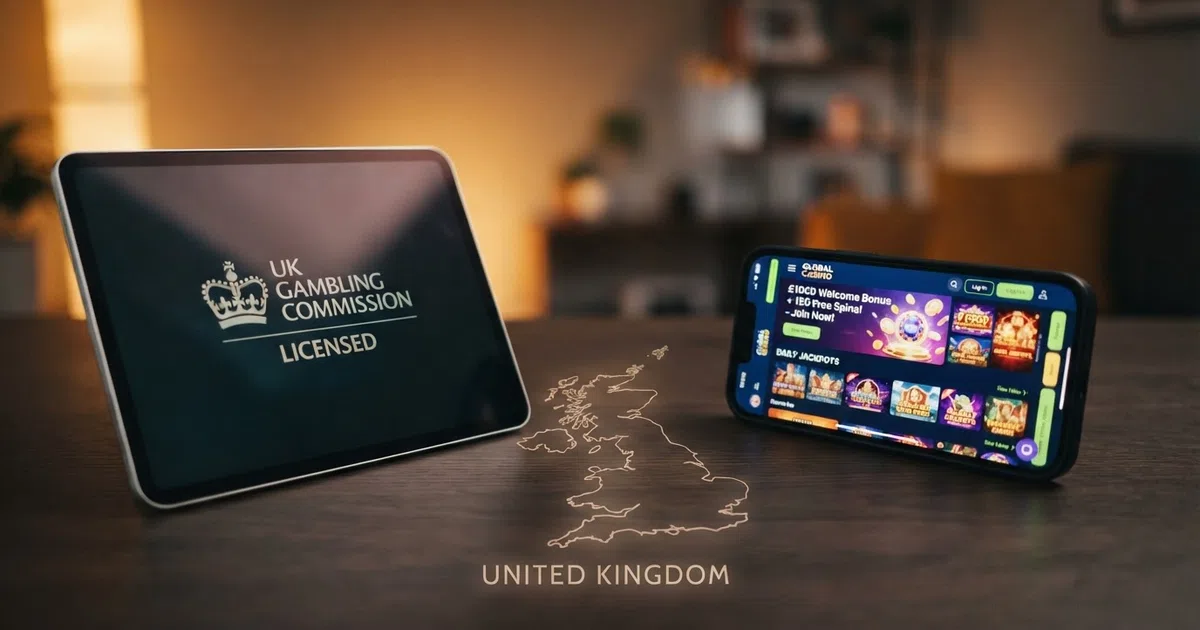
*Data current as of 17 August 2026. Licence claims verified against the UK Gambling Commission’s public register and GamStop’s published participant list.*
The Non-UKGC Casino Landscape: What Sits Outside the UK’s Regulatory Net
A non-UKGC casino is, in plain terms, any online gambling site that accepts players from Great Britain without holding an operating licence from the UK Gambling Commission. The category is defined by what the site does not have, not by what it does, and that single negative defines everything else about how these casinos reach players and what those players keep.
What “Non-UKGC” Actually Means
The Gambling Act 2005 is the controlling statute, and it draws the line on the supply side. Any operator that provides gambling facilities to a person in Great Britain is required to hold a UKGC operating licence, irrespective of where the operator is incorporated, where its servers sit, or which other jurisdictions have authorised it. A casino licensed in Curaçao, in Malta, in Gibraltar, or in any other jurisdiction is “non-UKGC” for UK players the moment it accepts a registration from someone in Great Britain without a Commission licence. The label is a legal category, not a marketing one.
A UKGC licence confers specific obligations: a licence number that must be displayed on the operator’s site, mandatory participation in GamStop, the 10x wagering cap on bonuses from 19 January 2026, the online slots stake limits of £5 for adults 25 and over and £2 for those aged 18 to 24 introduced in April and May 2025, and a binding complaints procedure ending in an approved Alternative Dispute Resolution provider. A casino without the licence owes none of these. The term is not a synonym for “unlicensed” in the absolute sense — most non-UKGC sites do hold a licence somewhere — but it is a synonym for “not licensed for the UK.”
How Non-UKGC Casinos Reach UK Players
UK players reach these sites through channels the UKGC does not regulate. Affiliate guide sites dominate the search landscape, ranking and reviewing operators that the Commission itself cannot advertise to UK customers. The dominant colloquial framing on those pages is “not on GamStop,” which positions the absence of self-exclusion as a feature rather than a missing protection. Forum word-of-mouth on CasinoMeister and AskGamblers carries the reputation signal that an official register cannot. Crypto marketing appeals to a different audience again: no crypto-only casino has been approved for a UKGC licence, because the KYC framework the Commission enforces conflicts with anonymous crypto deposits.
The search terms UK players actually use reflect this ecosystem. “Non-UKGC casinos,” “offshore casinos,” “international casinos,” and “non-GamStop casinos” are the four framing words that recur across the affiliate landscape. They describe the same target from different angles: a casino that the UKGC does not license, that the UKGC’s self-exclusion system does not reach, and that the player can reach from a UK address.
Is It Legal? What UK Law Actually States on Using Casinos Outside the UKGC
The legal picture is sharper than the marketing on either side suggests, and it splits cleanly between the operator and the player.

What “Non-UKGC Licensed” Means in Practice
Section 33 of the Gambling Act 2005 creates a summary offence for any operator that provides gambling facilities to persons in Great Britain without a UKGC licence. The offence is on the operator. The Gambling Act does not criminalise the act of gambling at an unlicensed site. No UK player has been prosecuted, fined, or formally cautioned for placing bets at an offshore casino. Enforcement activity is directed at operators, not individual players, and that is the entire legal position an individual needs to hold in mind.
Section 330 of the same Act creates a separate offence for advertising unlawful gambling, which is why licensed UK operators cannot market non-UKGC casinos to UK customers. The shape of UK enforcement has also tightened around the regulated market itself. The statutory gambling levy commenced in April 2025 at 1.1% of Gross Gambling Yield for remote betting and casino operators, with payments due by 1 October each year. Remote Gaming Duty rises from 21% to 40% from 1 April 2026, the largest increase in tax on remote gaming in the regime’s history. Both measures push against the licensed operators’ margins, and both have a downstream effect on the offers those operators are willing to extend — a market-shaping pressure that pushes some of the player base toward the offshore side.
The UKGC-Licensed Route: How the Regulated Market Works
The licensed UK market is, by any measure, the most heavily regulated gambling market in the world. The UK Gambling Commission’s public register, last updated 29 July 2026, lists 2,666 licensed businesses. Every legitimate UK-facing casino appears on it, and every legitimate UK-facing casino displays a licence number that resolves against that register. Verification is a search by business name, trading name, domain, or account number, and it is free.
GamStop is the other pillar. It is a compulsory condition of every UKGC operating licence, and the participant list, last updated 15 July 2026, names the major operators covered: Bet365, Sky Bet, Paddy Power, Betfair, William Hill, 888, MrQ, PlayOJO, LeoVegas and Casumo among them. A player who has self-excluded through GamStop is blocked from every UKGC-licensed site for the exclusion period they selected. The Licensed Conditions of Codes of Practice add the rest: affordability checks, deposit limits set by the player with operator oversight, reality-check pop-ups during play, the online slots stake limits, the 10x wagering cap, and the ban on credit card gambling that has stood since April 2020.
Casinos Operating Without a UKGC Licence
Offshore operators accept UK players from jurisdictions where the UKGC holds no authority. Curaçao dominates the volume. The Curaçao Gaming Authority’s LOK (National Ordinance for Games of Chance) reform brought enhanced compliance: mandatory AML protocols, responsible gambling tools, player fund segregation, and formalised complaints procedures. The dispute resolution infrastructure behind those procedures, however, remains weaker than what the UKGC or Malta Gaming Authority require. Malta, Gibraltar, and the Isle of Man are established alternative hubs that UK-facing operators have used historically. Anjouan has emerged more recently as a lower-friction licensing option for crypto-first brands.
The crypto segment sits entirely outside UKGC reach. No crypto-only casino has been approved for a UKGC licence, because the Commission’s KYC requirements are incompatible with the anonymous deposits that crypto platforms rely on. A UK player who wants to deposit with Bitcoin, Ethereum, or USDT, or who wants to register with only an email address, has only offshore options.
What You Give Up When You Leave the UKGC Framework
The protections that disappear are specific, and nine of them are concrete:

- No access to UKGC complaint procedures or approved Alternative Dispute Resolution such as IBAS, the Independent Betting Adjudication Service
- No Financial Services Compensation Scheme cover on cash held in operator player accounts
- No GamStop-linked self-exclusion enforcement, the single most-cited reason UK players search for these sites
- No UKGC affordability-check triggers that prompt intervention when spend patterns suggest harm
- No UKGC-mandated RTP integrity audits of the games offered, the regular third-party testing the Commission requires
- No protection under the 10x wagering cap that applies to UK bonuses from 19 January 2026
- No protection under the credit card gambling ban that has applied to UKGC licensees since 14 April 2020
- No contribution to the statutory gambling levy framework that funds research, treatment, and harm prevention in Britain
- No online slots stake limits, the £5 cap for adults 25 and over, the £2 cap for those aged 18 to 24
These nine items are not edge cases. They are the spine of the UK consumer protection regime, and precisely none of them travels with the player to an offshore casino.
Non-UKGC Casinos and GamStop: No Self-Exclusion Link
GamStop is a compulsory condition of every UKGC operating licence. Non-UKGC casinos are disconnected from it by design, because they are not party to the UKGC’s licensing framework. A player who has self-excluded through GamStop cannot, in fact, open an account at Bet365, William Hill, 888, MrQ, PlayOJO, LeoVegas, Casumo, Paddy Power, Sky Bet, Betfair, or any other UKGC-licensed operator for the period they selected. They can, in fact, open an account at a Curaçao-licensed casino the same afternoon. That is the harm vector the search term “not on GamStop” describes in plain language, and it is the reason responsible gambling charities treat the availability of offshore sites as a bypass risk for players who have already decided to stop.
The Jurisdictions Behind Offshore Casinos: Curaçao, Malta and Beyond
Each offshore licensing regime offers a different tier of player protection, and the spread matters more than the headline.
| Regulator | Licence Verification | Dispute Resolution | GamStop Integration | RTP Audits | Wagering Cap | Stake Limits | Player Fund Segregation |
|---|---|---|---|---|---|---|---|
| UKGC | Public register, 2,666 businesses | Approved ADR (IBAS) | Mandatory | Required | 10x from 19 Jan 2026 | £5/£2 slots | Required |
| Malta (MGA) | MGA public register | Formal ADR process | None | Required | None imposed | None imposed | Required |
| Curaçao (CGA/GCB) | GCB register post-LOK | Weaker than UKGC or MGA | None | Required under LOK | None imposed | None imposed | Required under LOK |
| Gibraltar | GRA register | Operator-defined | None | Required | None imposed | None imposed | Required |
| Isle of Man | GSC register | Operator-defined | None | Required | None imposed | None imposed | Required |
| Anjouan | Limited public register | Minimal infrastructure | None | Not required | None imposed | None imposed | Not required |
The MGA is generally considered the strongest offshore regulator, with formal ADR processes that come closest to the UK model. Curaçao has invested in compliance through the LOK reform but the dispute resolution infrastructure behind those rules remains less developed. The table shows the practical shape of the choice: the same bonus headline sits on top of very different redress mechanisms.
The Bonus Cost: A Worked Example
A wagering requirement is the most expensive line in any welcome offer, and the spread between the UK and offshore end of the market is now a regulatory matter as much as a marketing one. Take two real offers from the featured set.
The first: 888casino’s UK welcome, 100% up to £100 at 10x wagering on the bonus amount. The required turnover is £100 multiplied by 10, which is £1,000. Staked at 10p per spin, that £1,000 works out to 10,000 spins of the chosen slot. At a 5-second spin interval, 10,000 spins run for 50,000 seconds, or roughly 13.9 hours of continuous play. Assuming only the bonus amount is wagered, and the bonus is the only money at risk, the calculation answers how long clearing the bonus takes: about 14 hours of uninterrupted play, in return for a £100 bonus with a £500 maximum cashout.
The second: MyStake’s offshore welcome, 150% up to £750 on the first of three deposits, at 30x wagering on deposit plus bonus combined. On a £500 deposit, the player receives a £750 bonus and must wager the £1,250 combined at 30x, which is £37,500 in turnover. At 10p per spin, that is 375,000 spins. At the same 5-second interval, 375,000 spins run for 1,875,000 seconds, or about 520.8 hours of continuous play. The bonus funds in question are £750. The figure answers how long, not how much: clearing MyStake’s first-deposit bonus alone would take 22 days of solid play, in return for a bonus capped by the operator’s standard withdrawal rules.
The wagering multiple is the only number that moves between these two calculations. 10x against 30x is a threefold difference, and the play time required multiplies by the same factor. The marketing word for both is “welcome offer.” The arithmetic tells the reader which one is worth the time.
UKGC vs Offshore: The Ten Operators That Define the 2026 Choice
The ten operators below are split six-and-four: six UKGC-licensed names that anchor the regulated market, and four offshore alternatives that accept UK players. Every one serves a British customer from the same device. The protections divide is the entire point of comparing them.

| Operator | Licence | GamStop Connected | Welcome Offer | Wagering | Bonus Validity |
|---|---|---|---|---|---|
| Bet365 | UKGC active | Yes | Up to 500 free spins over 10 days (0.10p/spin) | 10x cap applies | 24h per batch |
| William Hill | UKGC 39225 (WHG International, Gibraltar) | Yes | Bet £10 Get £30 free bets (sports) | 10x cap applies | 7 days |
| 888casino | UKGC active | Yes | 100% up to £100 | 10x on bonus funds | 90 days |
| LeoVegas | UKGC 39198 | Yes | 50 free spins on Big Bass Splash (10p/spin) | 1x deposit to trigger; spins wager-free | 7 days deposit / 3 days spins |
| PlayOJO | UKGC (SkillOnNet) + MGA | Yes | 80 free spins on Big Bass Bonanza (£0.10/spin) | Zero wagering | On first deposit |
| MrQ | UKGC 60629 (Tek Fox) | Yes | Up to 300 free spins on Big Bass Splash (10p/spin) | Zero wagering | 48h per batch |
| MyStake | Curaçao GCB | No | 150% up to £750 + 50 FS (1st of 3 deposits, total £1,500) | 30x deposit + bonus | 30 days |
| Rolletto | Curaçao eGaming | No | Up to £5,500 + 200 free spins | 30x on bonus | 30 days |
| Donbet | Curaçao GCB | No | 150% up to €750 + 50 FS (casino); 170% up to €1,000 + 100 FS (crypto) | 30x combined (deposit + bonus + FS) | — |
| Stake | Curaçao | No | 200% deposit bonus up to $2,000 | 40x on bonus | — |
Donbet and Stake have not confirmed a published bonus validity window in the operator terms reviewed for this page, which is itself information: a UKGC-licensed operator must state the period clearly under the Commission’s transparency rules. Offshore operators are not bound to the same standard.
Bet365 — UKGC-Licensed, GamStop-Connected, Up to 500 Free Spins
Bet365 sits fully inside the UK regulatory framework. The UKGC operating licence is active, the company is a confirmed GamStop participant, and the welcome offer runs to 500 free spins over ten days at 0.10p per spin, triggered by a £10 deposit and stake. Each batch carries 24 hours of validity. Game providers include Playtech, Microgaming, NetEnt, and Evolution, the tier-one studios that supply most of the UK market. The 10x wagering cap that took effect on 19 January 2026 applies to the bonus terms, and Bet365’s standard conditions sit within that ceiling. This is the shape of the regulated end of the market: a known operator, a known regulator, a known dispute path.
William Hill — UKGC Account 39225, Gibraltar-Based
William Hill operates through WHG International Limited under UKGC account 39225, with the licence held through a Gibraltar corporate entity. The brand is a confirmed GamStop participant. Its headline UK welcome is a sports-led Bet £10 Get £30 in free bets, with seven days of validity; the casino welcome varies by promotion. Game providers include Playtech, Microgaming, NetEnt, Evolution, and IGT. Wagering is capped at 10x under the UKGC rules. For a UK player who wants a familiar high-street name with the full regulated-market apparatus, William Hill is exactly that.
888casino — UKGC-Licensed, 100% Match to £100 With a 90-Day Window
888casino carries an active UKGC licence, is a GamStop participant, and runs a straightforward deposit match: 100% up to £100, with 10x wagering on the bonus funds, a 90-day bonus validity window, and a £500 maximum cashout from the bonus. The minimum deposit is £10. The 90-day window is one of the longest in the featured set, and for a player who wants time to clear the bonus rather than racing a clock, that is a meaningful number. The £500 cashout cap, however, is the number that bounds the offer. Providers include NetEnt, Evolution, Playtech, and Pragmatic Play.
LeoVegas — UKGC Account 39198, 50 Wager-Free Spins
LeoVegas runs on UKGC account 39198 and has restructured its welcome away from a traditional deposit match. The current offer is 50 free spins on Big Bass Splash at 10p per spin, triggered by a £10 deposit and a 1x wager on that deposit. The spins themselves are wager-free. The player has seven days to wager the deposit and three days to use the spins. Providers include NetEnt, Microgaming, Evolution, Pragmatic Play, and Play’n GO. For a player who prizes the absence of wagering, this is the cleaner offer, though the £10 deposit still has to clear a 1x playthrough before the spins unlock.
PlayOJO — Zero-Wagering Pioneer, UKGC and MGA Dual-Licensed
PlayOJO holds a UKGC licence through SkillOnNet Ltd and an MGA licence for its European operations, and it is a confirmed GamStop participant. The welcome offer is 80 free spins on Big Bass Bonanza at £0.10 per spin, with zero wagering on all bonuses and free-spin winnings. The minimum deposit is £10. Providers include NetEnt, Microgaming, Evolution, Pragmatic Play, and Play’n GO. PlayOJO built its brand on no-wagering bonuses, and the offer is exactly that: a bonus where every penny of winnings is paid as cash. The structure is the clearest expression of the regulated market’s answer to the offshore welcome package.
MrQ — UKGC Account 60629, Up to 300 Wager-Free Spins
MrQ operates under UKGC account 60629, held by Tek Fox Limited. The welcome is structured as up to 300 free spins on Big Bass Splash at 10p per spin, delivered in batches of 75 per day across four deposits. Every promotion on the platform is wagering-free. Each batch carries 48 hours of validity. Providers include Pragmatic Play, Blueprint, Red Tiger, and Evolution. The four-deposit structure stretches the headline figure across a longer engagement, and the zero-wagering policy means every spin’s winnings are paid in cash from the moment they land.
MyStake — Curaçao GCB, Three-Deposit Welcome Package to £1,500
MyStake runs on a Curaçao GCB licence and does not appear on the UKGC register. The welcome package is worth up to £1,500 across three deposits, with the first deposit offering 150% up to £750 plus 50 free spins. Wagering is 30x on deposit plus bonus combined, with a 30-day bonus validity and a £20 minimum deposit. Providers include Pragmatic Play, NetEnt, Evolution, Microgaming, Hacksaw, and Play’n GO. The package is large. The playthrough obligation, on the calculation in the section above, would take the better part of a month of continuous play to clear on the first deposit alone. That is the trade in concrete terms.
Rolletto — Curaçao eGaming, Welcome Package to £5,500 With a Cashout Cap
Rolletto holds a Curaçao eGaming licence and is not connected to GamStop. The welcome package is the largest headline in the featured set: up to £5,500 plus 200 free spins across the deposit sequence, with 30x wagering on the bonus amount, a 30-day validity window, and a £10 minimum deposit. Two caps do the most work in the small print. A £5 maximum bet applies during wagering, which constrains how the bonus can be played through, and welcome bonus winnings are capped at 10x the bonus amount. The 10x cashout cap is the line that turns a £5,500 headline into a more bounded reality. Providers include Pragmatic Play, Evolution, NetEnt, Hacksaw, Play’n GO, and Microgaming.
Donbet — Curaçao GCB, Parallel Casino and Crypto Welcome Tracks
Donbet is licensed by the Curaçao GCB and is not on the UKGC register or the GamStop participant list. The platform runs two parallel welcome structures. The casino welcome is 150% up to €750 plus 50 free spins. The crypto welcome is 170% up to €1,000 plus 100 free spins. Both carry 30x combined wagering on deposit, bonus, and free-spin winnings, with a €20 minimum deposit and a €5 maximum bet per spin during wagering. The crypto track is the structural answer to the fact that no UKGC-licensed operator can offer this option, and the wagering obligation on it is the same as the casino track. Providers include Pragmatic Play, Evolution, NetEnt, Hacksaw, and Play’n GO.
Stake — Curaçao-Licensed Crypto Casino, 200% Bonus With 40x Wagering
Stake runs on a Curaçao licence and does not appear on the UKGC register. The welcome bonus is a 200% deposit match up to $2,000, with 40x wagering on the bonus amount only and a $10 minimum deposit. The 40x multiple is the highest in the featured set, and the calculation in the section above scales linearly with the multiple. Stake is positioned as a crypto-first platform, and that positioning is the offer’s reason to exist: UKGC-licensed operators cannot run this kind of promotion. Providers include Pragmatic Play, Evolution, Hacksaw, Nolimit City, and Push Gaming.
How to Spot a Safe Non-UKGC Casino (and Avoid the Rest)
A licence alone proves a casino exists on a regulator’s register. The harder question is whether the operator behind that register entry is worth trusting with a deposit, and the four checks below are the filter.

How to Verify a Non-UKGC Casino’s Licence
Every genuine casino, regardless of jurisdiction, displays a licence number on its site. The footer is the most common location. The skill is not in finding the number, it is in checking it against the issuing regulator’s own register, and not against an image of a regulator’s logo. For Curaçao, the GCB register now reflects the LOK reform’s enhanced compliance regime. For Malta, the MGA public register carries full licence history. For Gibraltar and the Isle of Man, the GRA and GSC registers serve the same function. A licence number that does not resolve on the relevant register is not a licence. A casino that points at a regulator whose register is not publicly searchable is asking the player to take the badge on trust, and the entire point of the licence is to remove that requirement.
Trust Signals Beyond the Licence Badge
A licence proves a casino exists on a register. Reputation tells you whether it is worth trusting. CasinoMeister and AskGamblers carry the forum reputation signal that no regulator’s register can. Payment processing speed, the gap between a withdrawal request and funds landing, is the practical test of an operator’s solvency. The operator-group track record, who actually owns the brand, is often more informative than the licence itself: a casino owned by a known operator group with a long history carries a different risk profile from a brand-new site with a fresh Curaçao number. Third-party testing certifications from eCOGRA or iTech Labs are an additional signal, though they are not a substitute for a regulator’s framework. The transparency of the terms and conditions, the clarity with which wagering requirements, maximum bets, and cashout caps are stated, is itself a tell.
Red Flags That Signal an Unsafe Casino
The warning signs are concrete. No verifiable licence, or a licence from a regulator with no active public register, is the first. No responsible gambling tools on site, no deposit limits, no self-exclusion mechanism, is the second. Bonus terms with unrealistic wagering requirements, or hidden maximum-cashout clauses buried in the small print, is the third. Missing or vague terms and conditions, no clear statement of the operator’s corporate identity, is the fourth. No HTTPS, no data-protection policy, is the fifth. Marketing that promotes KYC avoidance as a feature is the sixth and most diagnostic. The nine protections a UK player loses by leaving the UKGC framework, listed earlier, are the benchmark against which any non-UKGC site should be measured: a site that offers none of the equivalent tools, voluntary or otherwise, is offering none of the equivalent safety.
New Non-UKGC Casinos in 2026: What to Watch When a Site Launches
A new offshore casino launches every few weeks. The polished design, the fresh welcome bonus, the “Just Launched” badge, are all marketing artefacts. None of them substitute for the track record the operator has not yet earned.

New Non-UKGC Casino Sites Launched in 2026
The newest offshore casinos targeting UK players share certain features. The welcome offers tend to be larger than the established brands, on the logic that an unknown name needs a louder pitch. The licence will often have been issued in the past few months, sometimes weeks, which means the operator has not yet faced a real complaint cycle. The payment terms tend to favour the operator, with longer pending periods and tighter cashout rules. None of these features is a red flag in itself. The combination of all three on a single site is.
What to Check Before Joining a Newly Launched Casino
A brand-new casino has no player history. The due-diligence checklist substitutes for that absence. First, the licence: how old is it, and from which regulator. A Curaçao GCB number issued last month is a different proposition from a Curaçao number held by an operator group that has run a casino for five years. Second, the operator group: who really owns the brand, and what else do they run. CasinoMeister and AskGamblers will usually have a thread if the group is known. Third, the payment providers: established processors, with named partners, are a different signal from a casino that funnels deposits through a single opaque intermediary. Fourth, the terms and conditions: a new casino’s T&Cs should be complete, specific, and free of internal contradictions. Fifth, the customer support: a first-contact response that is slow, evasive, or non-specific tells the player how that operator handles problems before any money is at stake. Sixth, the initial player feedback: the first hundred forum posts about a new casino are disproportionately informative, because they describe exactly the friction points the operator has not yet learned to manage.
Staying in Control: Responsible Gambling Tools and Where to Find Help
A licence does not determine whether a player needs help. It determines the help that the platform is required to offer. The help that exists outside any platform, in the UK support infrastructure, is available regardless of where a player has chosen to play.

Self-Exclusion Tools: GamStop and Beyond
GamStop is the UK self-exclusion scheme, and every UKGC-licensed operator is required to participate. The participant list, last updated 15 July 2026, includes Bet365, William Hill, 888, MrQ, PlayOJO, LeoVegas, Casumo, Paddy Power, Sky Bet, and Betfair among many others. A player who registers with GamStop is blocked from every UKGC-licensed site for the period they select. The non-UKGC sites are not connected to GamStop, which is precisely why the term “not on GamStop” is the dominant search framing in this market. For a player who has self-excluded and is now looking for an offshore site, the practical question is not whether the offshore casino will accept them; it will. The question is whether bypassing the self-exclusion they chose is the decision they want to make.
The fallback tools exist. Gamban and BetBlocker are device-level blocking tools that work across most gambling sites, UKGC-licensed or otherwise. Manual self-exclusion requests to individual offshore operators are honoured by some and ignored by others. None of these is as robust as GamStop’s automatic enforcement, which is the point.
Deposit Limits, Time-Outs and Reality Checks
UKGC operators must offer player-set deposit limits, must run affordability checks on patterns that suggest harm, and must surface reality-check pop-ups during extended play sessions. The online slots stake limits of £5 for adults 25 and over and £2 for those aged 18 to 24, introduced in April and May 2025, apply to UKGC-licensed sites only. Offshore casinos do not impose UKGC-mandated limits. Where deposit limits exist at all, they are self-imposed. The platform does not enforce them; the player does.
For a player who is moving from a UKGC-licensed site to an offshore site, the practical change is that every protective default the UKGC required the operator to apply is now the player’s responsibility. A budget that was enforced by an affordability check becomes a budget the player has to hold themselves.
Where to Get Help: Helplines, Support Networks and Self-Assessment
The UK has one of the world’s most developed gambling support infrastructures, and it is free, confidential, and available to anyone.
- The National Gambling Helpline, delivered by GamCare, is available 24 hours a day, free, and confidential. Over 52,000 calls are taken every year.
- The GambleAware self-assessment quiz, a free online tool to evaluate the impact of gambling on the player or someone they know, has been completed over 160,000 times.
- The National Gambling Support Network delivers treatment in under two weeks from referral, and nine in ten people who complete treatment see an improvement in their condition.
- GamCare runs counselling and forum services alongside the helpline.
- GamStop provides free self-exclusion from every UKGC-licensed online operator.
The context behind the help matters. 13.1% of adults in Great Britain, approximately 6.8 million people, score at PGSI 1 or above on the Problem Gambling Severity Index, meaning they experience some level of gambling-related harm. 2.5% score at PGSI 8 or above, the threshold for problem gambling. 47% of adults gambled in the past four weeks, in the wave covering September 2025 to January 2026. 8% of adults, an estimated 4.3 million people, are affected by a family member’s or friend’s gambling, and approximately 2 million children live in households with adults experiencing problem gambling. The numbers explain why the help exists at the scale it does.
How We Evaluated These Casinos
The assessment behind every operator on this page draws on four sources. The UKGC public register, last updated 29 July 2026, confirms the licence status of every UKGC-licensed operator and provides the basis for the non-UKGC classification of the four offshore brands. The GamStop participant list, last updated 15 July 2026, confirms whether an operator is integrated with the self-exclusion scheme. The operators’ own published terms and conditions, current at the date of this page, supply the welcome-offer structure, the wagering requirements, the bonus validity windows, and the maximum-bet and maximum-cashout rules. CasinoMeister and AskGamblers player forums provide the reputation signal that an official register cannot.
The ranking criteria, applied equally to every operator, are licence status and jurisdiction, GamStop integration, the headline welcome offer and its actual terms, the wagering requirement as a multiple of the bonus, the bonus validity window, the maximum-bet and maximum-cashout caps where they apply, and the player-protection tools available on the site. The order in the comparison table reflects those criteria, with UKGC-licensed operators presented first as the legal anchor and offshore operators second as the alternative the page is built around. No operator has paid for placement on this page.
What the Evidence Says About Playing at a Non-UKGC Casino
The trade-off the page describes is real, and the numbers in it are honest. A UK player who moves from a UKGC-licensed site to an offshore casino gains access to larger welcome bonuses, the absence of the 10x wagering cap, higher or no stake limits, and crypto payment options that the UK market does not offer. They lose ADR access, FSCS cover, GamStop enforcement, UKGC affordability triggers, RTP integrity audits, the 10x cap itself, the credit card ban’s protection, the statutory levy framework, and the online slots stake limits. The legal position is that none of this is illegal for the player. The risk sits with the operator.

The worked calculation in this page showed what the bonus headline costs in time. A £100 bonus at 10x wagering clears in roughly 14 hours. A £750 bonus at 30x on a £500 deposit clears in roughly 521 hours. The wagering multiple is the entire game. The marketing word is “welcome offer.” The arithmetic tells the reader which one is worth the time.
The evidence supports a position rather than a draw. A UK player who has decided they want a non-UKGC casino has decided that the larger bonus, the looser terms, or the crypto access is worth the protections they are giving up. The responsible gambling support infrastructure above is not conditional on the choice the player makes; it exists for them regardless. For a player who wants the full regulated-market apparatus, the six UKGC-licensed operators in the comparison table are the answer. For a player who has made the other choice, the four offshore operators are the comparison set, and the nine protections listed in the section above are the items to weigh against the bonus headline.
Frequently Asked Questions
What payment methods are available at non-UKGC casinos for UK players?
Non-UKGC casinos commonly accept cryptocurrencies, including Bitcoin, Ethereum, Litecoin, and USDT, as well as e-wallets, debit cards, and bank transfers. Credit card use varies by operator and jurisdiction, and crypto acceptance is one of the structural reasons players choose offshore sites, since UKGC-licensed operators cannot accept crypto deposits.
Are winnings from non-UKGC casinos tax-free in the UK?
Gambling winnings are not subject to UK income tax for individual players, regardless of where the platform is licensed. The tax position sits with the operator through Remote Gaming Duty, which rises from 21% to 40% from 1 April 2026, not with the player who receives the winnings.
Can the UK government block me from accessing non-UKGC casino sites?
The UK government has not blocked individual access to offshore gambling sites. Enforcement is directed at operators, payment processors, and affiliates under Section 33 of the Gambling Act 2005, not at the players who use these sites. The legal position of the individual has not changed, and no UK player has been prosecuted for placing bets at an offshore casino.
How does a Curaçao licence compare to an MGA licence for player protection?
The MGA is generally considered the strongest offshore regulator, with formal ADR processes and a mature dispute resolution framework. The Curaçao GCB has invested in compliance through the LOK reform, including AML protocols, responsible gambling tools, and player fund segregation, but its dispute resolution infrastructure remains less developed than the MGA’s. Neither reaches the level of UKGC consumer protection.
Why are UK players choosing non-UKGC casinos over UKGC-licensed sites?
The most common reasons are larger welcome bonuses, the absence of the 10x wagering cap that took effect on 19 January 2026, higher or no online slots stake limits, the availability of cryptocurrency deposits, and the absence of GamStop self-exclusion enforcement. The trade-off is the loss of nine specific UKGC consumer protections, including ADR access, FSCS cover, affordability checks, and RTP integrity audits.
What responsible gambling tools are available at casinos not connected to GamStop?
Non-UKGC casinos are not connected to GamStop by design. Some offer their own self-exclusion and deposit-limit tools, though they are not enforced as robustly as GamStop. Device-level blocking tools such as Gamban and BetBlocker work across most gambling sites. The National Gambling Helpline, GambleAware’s self-assessment, and the National Gambling Support Network are available to any UK player regardless of where they play.
Account – Non UKGC Licensed Casinos
Content created by the «Non UKGC Licensed Casinos» team